Hard water contains high levels of calcium and magnesium that create rock-hard scale buildup inside your machines. This mineral buildup clogs internal valves, coats a heating element, and creates friction in moving parts. Over time, this causes dishwashers and washing machines to leak, overheat, or fail years before they should. A water softening system prevents this damage by removing minerals before they enter your home.
How does hard water affect my appliances?
When you have hard water, every gallon flowing through your home carries dissolved minerals. In the Tampa Bay area, our water quality is often high in calcium and magnesium. As this water moves, it leaves behind tiny mineral deposits.
You might see these as white spots on your faucets, but the real trouble happens where you cannot see it.
Inside your dishwashers and washing machines, this scale buildup acts like cholesterol in an artery. It sticks to the walls of the pipes and the surfaces of mechanical parts.
This forces your appliances to work harder to do the same job. Instead of a smooth cycle, the machine struggles against the internal friction and reduced water flow. This constant strain leads to a much shorter lifespan for your expensive equipment.
Why is scale buildup so dangerous for dishwashers?
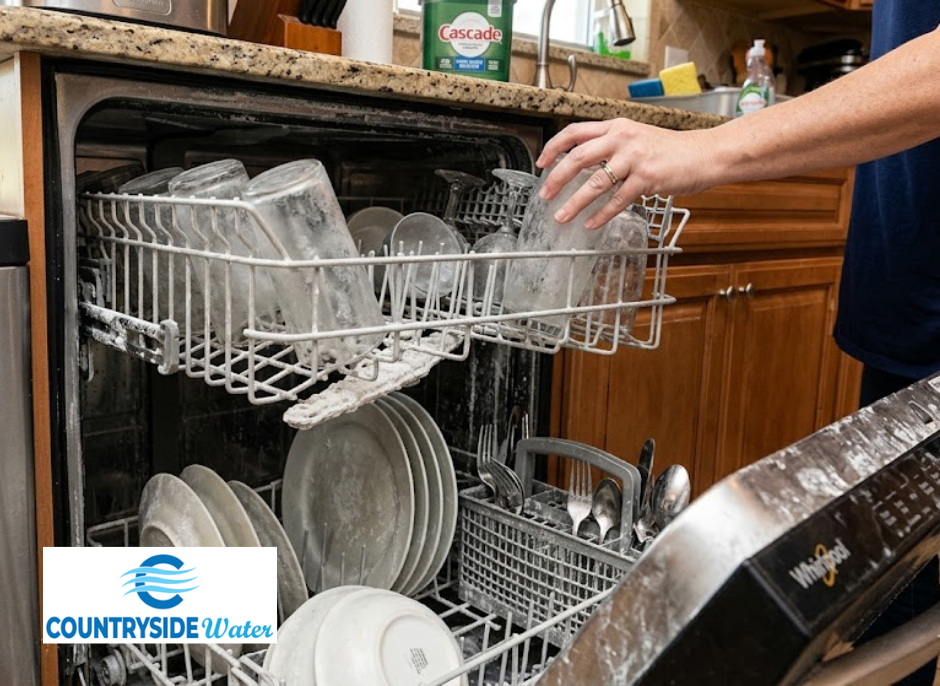
A dishwasher relies on precision. It has small spray arms with tiny holes designed to push water at a specific pressure. When mineral buildup starts, those tiny holes clog pipes and sprayers. This means your dishes do not get clean.
You might notice a film on your glasses or grit on your plates.
The most significant threat is to the heating element. To dry your dishes or reach the right cleaning temperature, the machine turns on a metal coil. In a home with hard water, that coil quickly gets coated in a thick layer of white scale. This layer acts as an insulator.
The element has to stay on longer and get much hotter to heat the water through the crust. Eventually, the element burns out or the constant overheating cracks the internal seals, leading to costly water damage.
How does hard water impact laundry machines?
Your washing machine is another high-value investment at risk. The calcium and magnesium in the water react with your laundry detergent to create “curd” rather than suds. This curd sticks to the outer tub and the internal pump.
As the mineral deposits grow thicker, they cause the pump to strain. It cannot drain the water as efficiently as it should. This reduced water flow puts a massive burden on the motor. Furthermore, hard water is abrasive.
Those tiny mineral crystals rub against the rubber seals and gaskets every time the machine spins.
Over the long term, these seals brittle and crack. A simple leak caused by hard water can lead to a flooded laundry room and thousands of dollars in repairs.
Can hard water ruin small kitchen appliances?
The problem is not limited to large machines. Think about your coffee makers and electric kettles. If you fill these with untreated tap water, you will see a white crust form at the bottom. This is the same scale buildup that kills larger machines.
In coffee makers, the thin internal tubes are very easy to clog. Once the water flows too slowly, the machine can no longer reach the right temperature to brew correctly. This affects the appliance efficiency and the taste of your morning cup.
Using a water softener or a reverse osmosis system is the only way to keep these small gadgets running like new.
How do I protect my appliances?
The most effective way to protect your appliances is to stop the minerals before they ever reach the intake hose. A water softening system swaps the “hard” minerals for “soft” ones that do not stick to surfaces.
By improving the quality of your water, you allow your machines to run exactly as the manufacturer intended. There is no friction in the valves and no crust on the heating parts. This significantly increases appliance efficiency and lowers your monthly energy bills.
Most importantly, it keeps your machines out of the landfill and saves you from the stress of a sudden breakdown.
FAQs
How do I know if I have hard water damage?
Look for white, chalky film on your dishes or a stiff feeling in your laundry. If your dishwasher takes longer to finish or your clothes look dull, mineral buildup is likely the cause.
Can I just clean the scale out of my machines?
You can use vinegar or chemical descalers to help temporarily. However, these do not reach the deep internal pipes and pumps where the most damage occurs. A water softener is the only permanent solution.
Does hard water cause leaks?
Yes. When minerals build up on rubber seals, the seals can no longer create a tight fit. This leads to slow drips that eventually turn into major water damage behind your walls or under your floors.
Will a water softener save me money?
Yes. You will spend less on detergent and soap because soft water suds better. You also avoid the high cost of replacing dishwashers and washing machines every few years.
Protect Your Appliances with Countryside Water
At Countryside Water, we have spent 43 years helping local families protect their homes from the harsh effects of Florida water. We have seen how hard water damage to appliances can drain a bank account.
Our goal is to provide honest, high-quality solutions that keep your home running smoothly.
As a veteran and family-owned business, we treat your property with respect. We do not believe in overcharging or selling you things you do not need. We offer water treatment solutions that are easy to maintain and built to last for the long term.
Contact our team today to schedule a free consultation.
*Military veterans and seniors receive discounted pricing.