Key Takeaways
- Best for TDS Removal: A reverse osmosis (RO) water filter system is the most reliable method to eliminate total dissolved solids from your drinking water.
- Advanced Filtration Technology: This system forces water through a specialized semi-permeable membrane to effectively screen out metals, salts, and chemical residues.
- Whole-Home Scale Protection: For comprehensive protection against mineral scale throughout your entire plumbing system, pairing an RO unit with a dedicated home water filtration system Tampa setup is highly recommended.
_________________________________________________________________________________________________________
Why Do You Need a Reverse Osmosis Water Filter System in Tampa Bay?
Installing a reverse osmosis water filter system is the most effective step you can take to clean up your drinking water. The local municipal water supply contains a high concentration of dissolved minerals, salts, and treatment chemicals.
While the city treats water to meet basic federal safety standards, the treatment process leaves behind chemical byproducts and an unpleasant taste. A reverse osmosis water filter acts as a final barrier right at your kitchen faucet, removing contaminants that municipal plants leave behind.
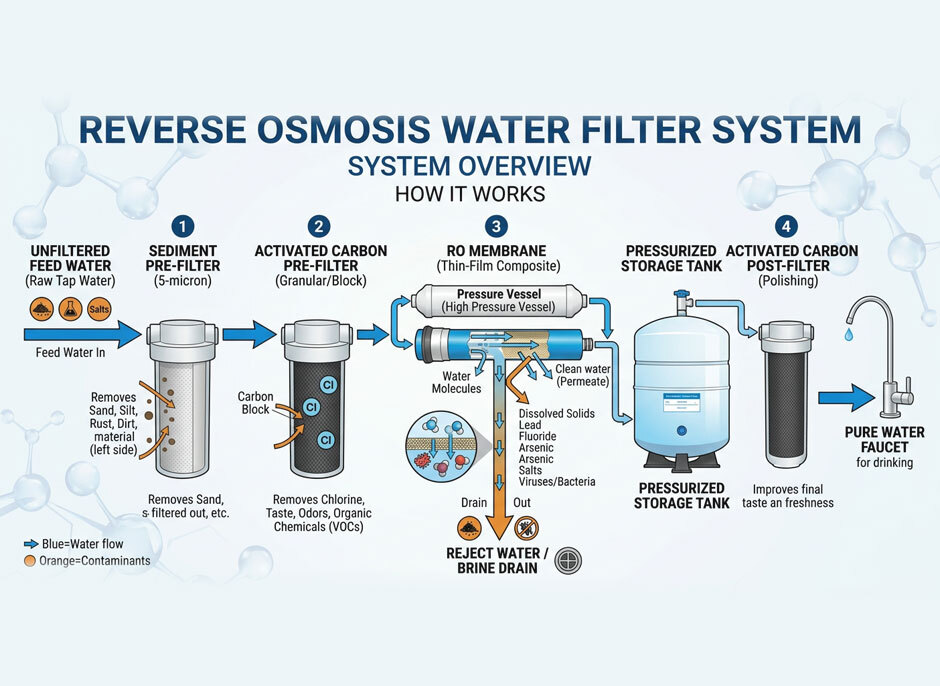
When tap water enters a reverse osmosis unit, the system forces water under high pressure through a microscopic membrane. This membrane has pores so small that only pure water molecules can pass through.
All the trapped contaminants get washed down the drain line. This process gives you ultra-pure water for drinking and cooking without the need to buy plastic water bottles.
Using reverse osmosis RO systems lowers the level of total dissolved solids in your water down to near zero. These solids include things like road runoff, agricultural chemicals, heavy metals, and fluoride.
By removing these particles, you change the actual texture and taste of your morning coffee, ice cubes, and home-cooked meals.
How to Improve Home Water Quality in Florida?
The fastest way to learn how to improve home water quality is to understand the difference between point-of-use and point-of-entry systems. Point-of-use systems treat water at a single faucet, while point-of-entry systems treat your whole house water supply.
To achieve the cleanest possible water, a combination of both systems is usually the smartest approach for Florida homeowners.
The local water treatment process relies heavily on surface water mixing with groundwater. This mixture creates fluctuating water quality throughout the year. During dry seasons, mineral concentrations rise.
During rainy seasons, runoff increases. Installing home water filters gives you consistent control over your indoor supply regardless of local weather patterns or municipal changes.
To successfully improve water quality, you must address the three main issues found in local plumbing lines: hardness minerals, chemical tastes, and dissolved solids. A proper layout manages these issues in stages. First, water passes through a system that addresses mineral hardness.
Next, carbon filtration traps chemical odors. Finally, a reverse osmosis unit refines your drinking water.
What Are the Signs of Hard Water in Florida Homes?
Recognizing the signs of hard water in Florida homes is easy once you know what to look for on your fixtures and dishes. Local groundwater travels through underground limestone, which dissolves large amounts of calcium and magnesium into the supply.
When this hard water dries on surfaces, it leaves behind a chalky white residue known as scale.
You will notice these hard water signs during everyday household tasks:
- Running the dishwasher: Your glasses and plates come out looking cloudy or covered in white spots.
- Fixtures and showerheads: A hard, white crust forms around the nozzles, slowing down water flow.
- Plumbing lines: Over time, scale attaches to the inside of your copper pipes, reducing water pressure throughout the home.
- Soap performance: Soap refuses to lather properly, requiring you to use twice as much product to get clean.
Fixing this mineral issue brings immediate benefits to your daily routine. Soft water leads to softer hair and better skin because it allows soaps and shampoos to rinse completely away without leaving a drying film behind. It also makes for easier cleaning because you no longer have to scrub stubborn soap scum off glass shower doors.
Most importantly, removing these minerals assists in protecting appliances like washing machines and dishwashers from internal scale damage, extending their working lifespan.
Reverse Osmosis vs Whole House Filter: Which Do You Need?
Choosing between a reverse osmosis vs whole house filter comes down to whether you want to protect your plumbing or purify your drinking supply. A whole-house filter connects directly to your main incoming water line to treat all the water used for showering, laundry, and cleaning.
A reverse osmosis system is a specialized tool meant for targeted purification at the kitchen sink.
| Feature | Whole House Carbon Filter | Reverse Osmosis System |
| Installation Point | Main water line (Point of entry) | Kitchen sink or ice maker (Point of use) |
| Primary Goal | Removes chlorine, bad smells, and sediment | Removes heavy metals, salts, and dissolved solids |
| Mineral Removal | Keeps minerals in the water | Removes over 95% of minerals |
| Water Flow Rate | High flow for the entire home | Low flow, uses a dedicated storage tank |
| Main Household Benefit | Protects skin, hair, and clothing in the shower | Provides pure water for drinking and cooking |
As the table shows, a whole-house carbon filter excels at removing chlorine and chemical odors from both hot and cold water lines. This keeps your skin from drying out in the shower. However, it cannot filter out dissolved solids like lead, arsenic, or salt.
For high-level purification, RO filtered water is necessary. When water flows through the multi-stage filters of an RO system, it strips away the microscopic contaminants that a standard carbon filter misses. Most homeowners find that using a whole-house filter alongside a reverse osmosis drinking system provides the absolute best protection for both their plumbing and their health.
How to Fix Smelly Tap Water?
If you want to know how to fix smelly tap water, you must first identify the type of odor coming from your faucet. The two most common odors in local water are a sharp swimming pool smell and a rotten egg smell. Both odors can be easily managed with the correct filtration equipment.
The swimming pool smell is caused by the chlorine compounds municipal utilities use to keep bacteria levels safe during delivery.
While chlorine is necessary for sanitation, nobody likes drinking it. A whole-house carbon block filter acts like a giant sponge, trapping the chlorine molecules before they can escape into your indoor air or your drinking glass.
The rotten egg smell comes from hydrogen sulfide gas trapped in underground aquifers. This gas is highly noticeable when water first comes out of the faucet.
Passing your water through a specialized oxidation filter or a heavy-duty carbon system neutralizes this gas instantly, removing the foul odor from your kitchen and bathrooms.
Choosing a Home Water Filtration System Tampa Homeowners Trust
Selecting a home water filtration system Tampa residents can depend on requires looking closely at local neighborhood water data. Water properties change depending on whether your supply comes from Hillsborough County wells or surface water reservoirs.
A system that works well in one neighborhood might need different filter media in another.
High mineral counts and summer chlorine spikes mean that local water filtration systems must be durable. A system built with heavy-duty control valves and high-grade carbon media will handle the local water conditions much better than generic retail store filters.
Investing in a properly configured home filtration setup cuts down on plumbing maintenance and keeps your water tasting great year after year.
Getting a Reverse Osmosis System Clearwater FL Residents Rely on
If you are looking for a reverse osmosis system Clearwater, FL homeowners use to fight local water issues, focus on system placement and tank size. The water supply in Pinellas County often carries higher levels of chloride and total solids due to coastal geography.
A standard carbon pitcher filter will quickly become overwhelmed by these elements.
An under-sink reverse osmosis system provides a continuous supply of purified water directly to a dedicated faucet and your refrigerator ice maker. This configuration protects your refrigerator lines from scale buildup and makes sure your ice cubes freeze perfectly clear.
It provides an efficient solution for coastal homes dealing with challenging municipal water conditions.
How Does a Water Softener Installation Tampa Bay Process Protect Your Home?
Scheduling a professional water softener installation is the best way to eliminate hard water problems for good. During installation, a technician plumbs a treatment tank directly into your main incoming water line.
This tank contains thousands of microscopic resin beads that carry a tiny electrical charge.
As hard water enters the tank, the calcium and magnesium minerals stick directly to the resin beads. The system trades these hard minerals for a tiny amount of sodium, sending soft water out to the rest of your house.
Every few days, the system automatically runs a cleaning cycle using a saltwater brine solution to wash the trapped minerals down the drain, resetting the resin beads for continuous operation.
This simple process keeps your plumbing clean and prevents hard scale from destroying your modern appliances.
Frequently Asked Questions
Does a reverse osmosis system remove healthy minerals?
Yes, reverse osmosis removes minerals along with harmful contaminants. Because the system cannot distinguish between good minerals and bad metals, it strips out everything.
If you prefer mineral-rich water, you can easily add a remineralization cartridge to the system to add clean calcium and magnesium back into your glass before drinking.
How often do reverse osmosis filters need to be changed?
The carbon and sediment pre-filters typically require replacement every six to twelve months depending on your household water usage. The main reverse osmosis membrane lasts longer, usually needing replacement every two to three years.
Keeping up with regular filter changes protects the membrane from fouling and maintains high purification rates.
Will a whole house filter fix hard water buildup?
No. A standard whole-house carbon filter removes chemicals, tastes, and odors, but it does not remove hardness minerals. To stop scale buildup on dishes and fixtures, you must install a dedicated water softener that uses ion exchange to remove calcium and magnesium from the water supply.
Why does my water look cloudy right after installing a new filter?
Cloudy water immediately after a filter change is usually caused by tiny, harmless air bubbles trapped inside the new filter media. If you let a glass of water sit for a few minutes, the cloudiness will clear from the bottom up as the air escapes.
Running the water for a few minutes after installation helps clear this air out of the lines.
Optimize Your Home Water Quality
Keeping your home water clean and free of mineral scale requires the right equipment and local expertise.
With 43 years of experience, our family-owned and veteran-owned business specializes in installing and servicing high-performance water softeners, whole-house carbon filters, and reverse osmosis systems. We operate with an honest approach, meaning no high-pressure sales pitches or hidden fees.
We are proud to offer specialized veteran and senior discounts to support our local community members.
If your system needs immediate attention or you want a quick upgrade, we offer same-day or next-day service to get your home water running perfectly.